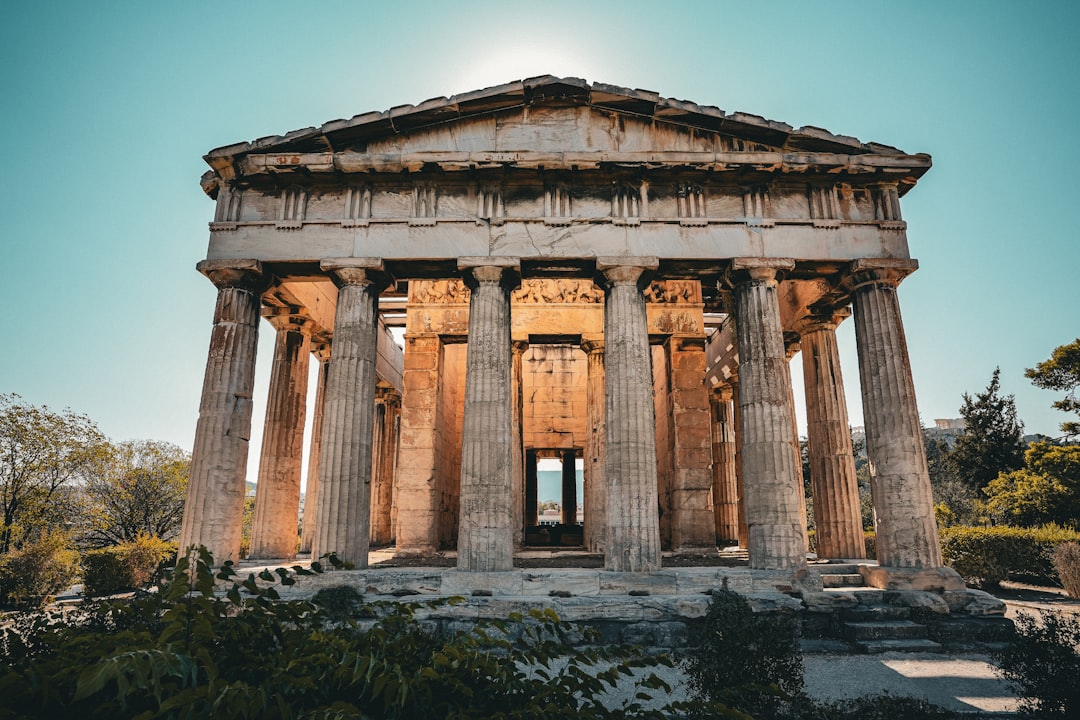
Ancient greek temple with large columns under blue sky.

Ancient Agora

Athens, Greece
i

Ancient greek temple with large columns under blue sky.

Photo by Kameron Kincade

Sun-baked columns rise from wildflowers, carrying the murmur of voices and footsteps where democracy once began. Every breeze comes scented with sage and olive trees, drifting across stones worn by centuries of daily life, debate, and drama. In the heart of ancient Athens, the Agora stands not as a silent ruin, but as an open book—inviting each visitor to wander through its living history and discover a city shaping the world.

Visiting Info

Currency
Entrance fee
10 EUR
Hours
Opening hours
Monday: 8:00 AM – 8:00 PM
Tuesday: 8:00 AM – 8:00 PM
Wednesday: 8:00 AM – 8:00 PM
Thursday: 8:00 AM – 8:00 PM
Friday: 8:00 AM – 8:00 PM
Saturday: 8:00 AM – 8:00 PM
Sunday: 8:00 AM – 8:00 PM

Contact Information

Location
Address
Athens 105 55, Greece

Planning your visit

To fully enjoy the Ancient Agora, thoughtful planning makes all the difference. Located at the foot of the Acropolis, this sprawling archaeological park draws both casual sightseers and history fans. Mornings bloom with soft light and quieter paths, while afternoons pulse with more travelers and the hum of local guides. Tickets are best bought ahead during the busy summer months, and a little preparation goes far—this ancient crossroads rewards patience and comfortable shoes.

  • Best time to visit: Spring and fall offer the nicest weather, but early mornings year-round promise fewer crowds.
  • How to get there: The Monastiraki Metro station sits just steps from the main entrance, linking easily to buses and trams. Walking from Plaka or the Acropolis takes less than fifteen minutes.
  • Accessibility: Most main paths are level and can be navigated by families and those with moderate mobility concerns, though some uneven ground may challenge wheelchairs and strollers.
  • Average visit duration: Plan on two hours for highlights, with three or more for deeper exploration or museum time.

Must see stuff

While legends echo around every marble fragment, the Agora’s main attractions sweep visitors into a world where ancient lawmakers argued, philosophers taught, and life unfolded under Attica’s wide sky. Every area, from grand halls to humble stalls, tells its own part of Athens’ story—some infamous, others quietly beautiful. Camera shutters click on both breathtaking landmarks and unexpected corners.

  • Stoa of Attalos: Reconstructed to its original grandeur, this colonnaded building now houses the Museum of the Ancient Agora, filled with artifacts that bring daily life into focus.
  • Temple of Hephaestus: Considered Greece’s best-preserved Doric temple, this hilltop sanctuary rewards visitors with both ancient detail and sweeping city views.
  • Byzantine Church of the Holy Apostles: Tucked amid the ruins, this 10th-century jewel offers quiet shade, delicate frescoes, and a glimpse into later Athenian faith.
  • Socrates’ Prison and the Odeon of Agrippa: These less-photographed spots immerse visitors in unexpected corners of the Agora, where political philosophy and cultural spectacle once thrived.
  • Photo-worthy locations: The hill above the temple at sunset, ruins of the Bouleuterion (where the ancient council met), and shaded mosaic-lined paths near the museum.
  • Cultural and historical facts: The Agora hosted everything from elections to athletic contests; laws and ideas debated here shaped future democracies around the world.

Tips for your visit

A few practical tricks help uncover the Agora’s treasures at every turn. The sun can be fierce, especially in summer, and the space between landmarks sometimes surprises with little shade. Local guides—many trained archaeologists—offer insight unavailable in guidebooks, while a strong pair of shoes shields feet from hard paths and uneven stones. Respect for history, and for fellow guests, turns a simple visit into something richer.

  • Best times to avoid crowds: Midweek mornings—especially outside high season—ensure room to explore and take photos without rush.
  • What to bring: Water, a hat, sunscreen, good walking shoes, and a small camera or smartphone for photos.
  • Local etiquette: No touching the ruins or climbing on columns; speaking quietly in churches and museum areas is expected. Always take litter with you.
  • Safety and comfort: Watch for slick stones and bring a light sweater in cooler months; toilets and rest areas are available near the museum.