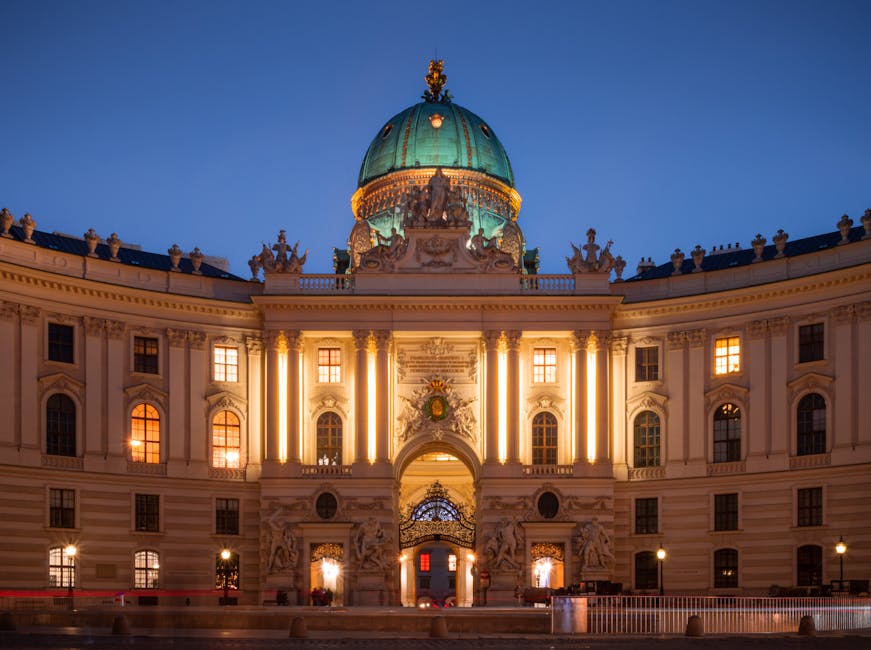
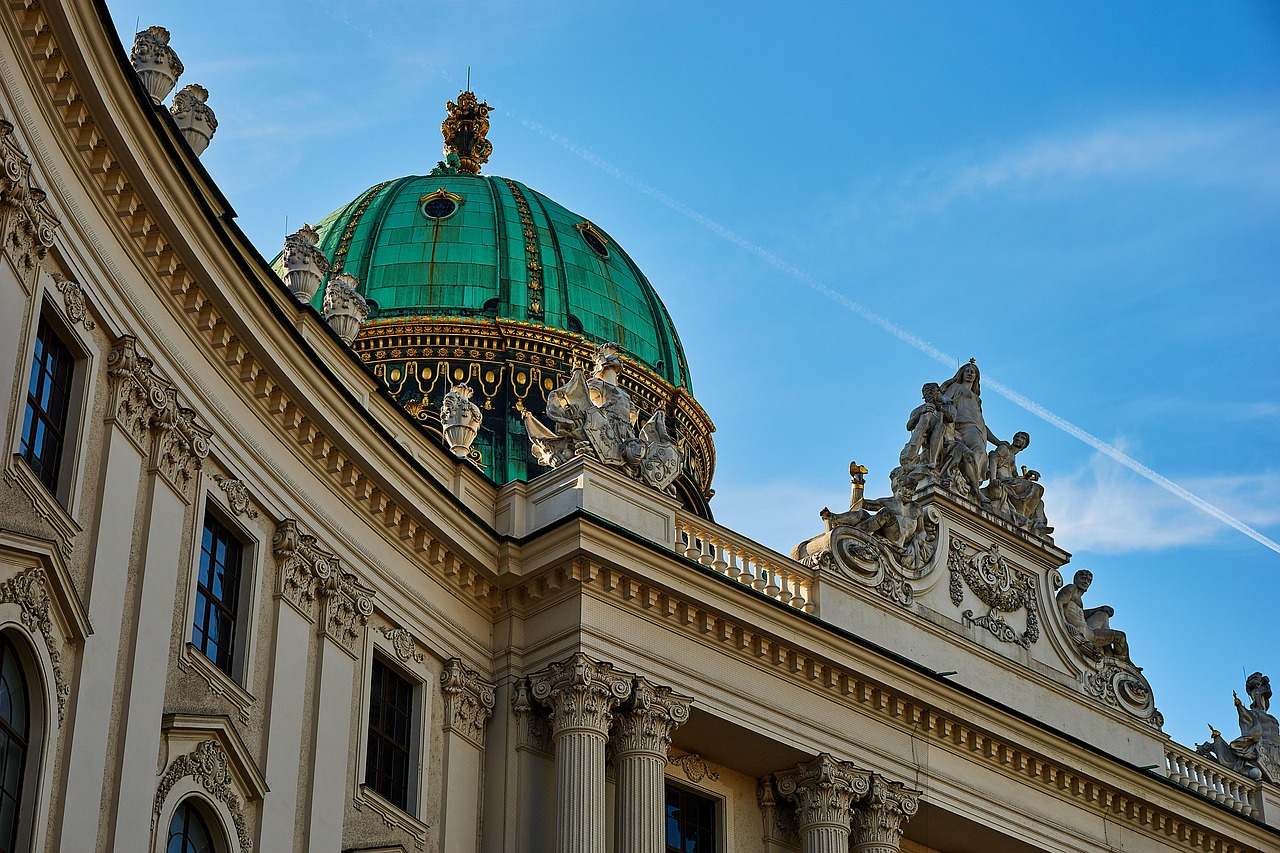
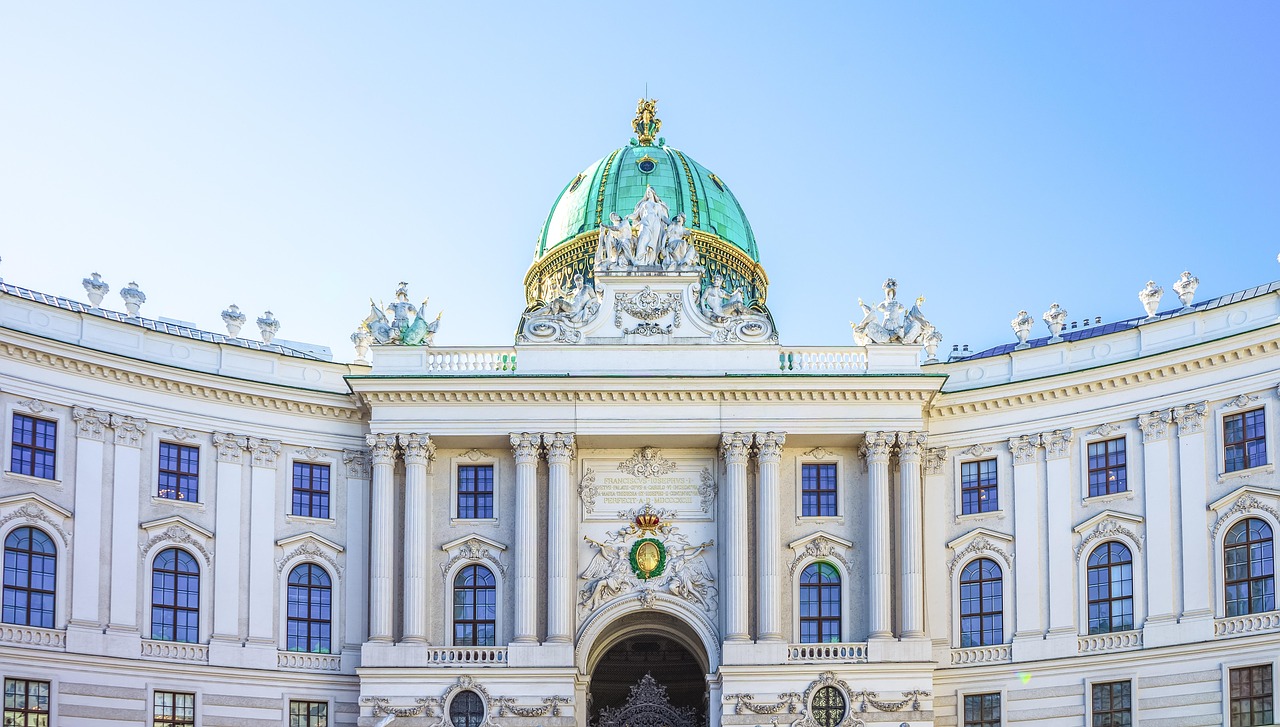
Stunning view of Hofburg Palace lit up during dusk in Vienna, Austria.
austria, vienna, capital city, building, castle, historical, sightseeing, architecture, facade, hofburg imperial palace, landmark, vienna, vienna, vienna, vienna, vienna
vienna, austria, hofburg imperial palace, to travel, tourism, habsburg, emperor, rich, building, architecture, sightseeing, noble, high nobility, imperial, empire, vienna, vienna, vienna, vienna, vienna, austria, austria, emperor, rich

Hofburg

Vienna, Austria
i

Stunning view of Hofburg Palace lit up during dusk in Vienna, Austria.

Photo by Niklas Jeromin

Through vaulted gateways and sunlit courtyards, the world of Viennese royalty lingers at Hofburg—an eternal palace sparkling at the city’s heart. Marble statues, clipped hedges, and distant echoing hooves make visitors pause. History breathes here, wrapped in Baroque grandeur and the gentle rustle of imperial secrets. The palace doesn’t just preserve Austria’s past; it weaves each visitor into its living, ever-present story.

Visiting Info

Currency
Entrance fee
17 EUR
Hours
Opening hours
Monday: 8:00 AM – 6:00 PM
Tuesday: 8:00 AM – 6:00 PM
Wednesday: 8:00 AM – 6:00 PM
Thursday: 8:00 AM – 6:00 PM
Friday: 8:00 AM – 6:00 PM
Saturday: 8:00 AM – 6:00 PM
Sunday: 8:00 AM – 6:00 PM

Contact Information

Location
Address
1010 Vienna, Austria

Planning your visit

Preparing for a Hofburg adventure demands a balance between anticipation and savvy timing. The palace complex sits at the very center of Vienna and bustles with travelers, school groups, and locals nearly year-round. Exploring courtly museums and imperial apartments can overwhelm, especially during peak holiday weeks or summer afternoons. Online ticket reservations save time, and early arrivals yield quiet halls. Transportation is easy, with trams, subways, and pedestrian-friendly boulevards funneling visitors to the grand entrance. Access suits a range of ages, though stone floors and staircases warrant comfortable footwear. Families and travelers with mobility needs should look for ramps and elevators—while not all original spaces are barrier-free, most highlights are accessible. Planning about half a day allows for a relaxed tour plus a pause in the shaded palace gardens.

  • Best time to visit: Weekday mornings in spring or autumn offer small crowds and soft light.
  • How to get there: Subway U3 (Herrengasse), tram lines 1, 2, D; parking nearby is limited.
  • Accessibility: Most museums and key sights have elevators or ramps, but some historic rooms are less adaptable.
  • Average visit duration: Three to four hours is ideal for exhibits, gardens, and a café stop.

Must see stuff

Hofburg’s labyrinth of halls, museums, and courtyards invites curiosity at every turn. Beyond the opulent facades, centuries-old treasures await—from the Emperor’s Imperial Apartments to the dazzling Imperial Treasury. Visitors gaze at Sisi’s combs and silken gowns, while down silent stone passages, priceless regalia glimmer in glass cases. In the Spanish Riding School, snowy-white Lipizzaners seem to float in air during morning practice. Photographers claim their corners in the sweeping Heldenplatz, snapping shots where history once unfolded. Those with time to linger discover lesser-known jewels, such as the intimate Silver Collection and the somber yet captivating Chapel where the Vienna Boys’ Choir sings.

  • Key sights: Imperial Apartments, Sisi Museum, Imperial Treasury (Schatzkammer), Spanish Riding School, and National Library State Hall.
  • Unique experiences: Lipizzaner morning training, guided ‘secret Hofburg’ tours, chamber music evenings in the palace.
  • Photo-worthy locations: Michaelerplatz’s sweeping entrance, Heldenplatz with palace arches, the red velvet halls of the National Library.
  • Cultural or historical facts: The Hofburg served as the seat of Habsburg emperors for over six centuries, shaping Central Europe’s destiny. Parts of the palace still house the office of Austria’s president today.

Tips for your visit

To get the most from a Hofburg visit, smart timing and practical planning matter. Early risers encounter a quieter palace and see detailed exhibits without crowds pressing in. Tickets covering multiple museums cost less when bundled online. Water and small snacks help—palace cafés are charming but become crowded by lunch. Walking shoes are vital, as corridors stretch across vast wings. Courteous whispers and gentle movement in historic rooms show respect for both artifacts and fellow travelers. Photography rules shift by area, so signs demand a quick glance. For those with limited mobility, check routes in advance, as some staircases are unavoidable. Small bags and patience smooth passage through security checks at museum entrances.

  • Best times to avoid crowds: Arrive right at opening or two hours before closing on weekdays.
  • What to bring: Refillable water bottle, camera or phone, map (digital or printed), sturdy shoes.
  • Local etiquette: Keep voices low in exhibitions, avoid flash photography, watch for velvet ropes.
  • Safety and comfort: Secure valuables in zipped bags, be mindful of slippery marble in rainy weather, watch for low light in older corridors.